
Estate Accounting
APPARA
TL;DR
Appara's tangled, hand-rolled front end was slowing the whole team down. By rebuilding around a real design system, matched 1:1 with the codebase, front-end development got 90–95% faster, accessibility improved, and design and development teams finally speaking the same language.
- Product Manager: Ryan Dankoff
- Product Designer: Frankie Radner
- Front-end Developer: Frankie Radner
- Full-stack Developer: Brian How
The Problem.
Appara's old stack wasn't just slow — it was actively working against the team.
5+ minutes per front-end change. Even small tweaks meant a full rebuild cycle.
No standardized components. Every screen was hand-rolled from scratch, which meant reinventing the same button, card, or form a dozen different ways.
Design and development were out of sync. Designers handed off files that developers had to reinterpret — and re-guess — every time.
Inconsistent experience. Because nothing was standardized, the product looked and behaved differently from page to page.
Accessibility wasn’t even a thought. With no system enforcing good patterns, accessibility gaps crept in everywhere.
The Process.
Rather than rebuilding everything at once, the approach was deliberate and staged:
Diagnosed the real bottleneck. The old stack itself — not the team — was the thing holding development back.
Started where it mattered most. Instead of designing top-down, the most-used areas of the product were tackled first, and the design system was built from those real screens rather than imposed on top of them.
Migrated incrementally. Old stack to new stack, piece by piece, rather than a risky big-bang rewrite.
Validated with real users. Customer feedback was built into the process, with testing before anything rolled out.
Built on solid foundations. Libraries like Bits UI and Tailwind gave the team accessible, composable primitives instead of hand-rolled CSS and components.
The Result.
The impact showed up immediately in how fast the team could move — and in how much better the product felt:
90–95% faster front-end development. Changes went from 5+ minutes each to sub-second.
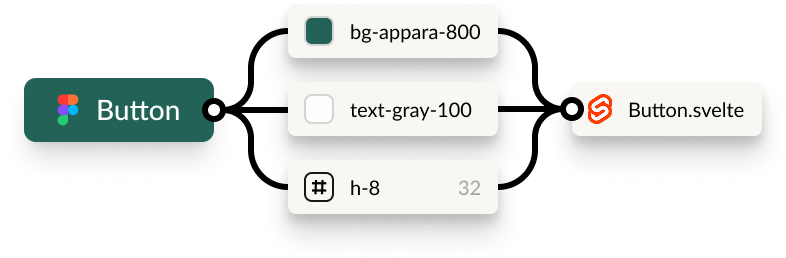
Design system that's a true 1:1 match with the codebase. No more guessing, no more drift between what's designed and what ships.
Faster design cycles, since designers were working from the same system developers were building with.
Higher-quality, more consistent UI across every page.
A modern interface that follows current UX best practices.
Meaningfully improved accessibility, baked into the components themselves rather than patched on after.